
LEARNING THROUGH PLAY
Play promotes all areas of development, especially in the prime areas of learning:
- Physical
- Communication
- Social Skills
- Play is learning, playing with your child is not only fun but one of the most important ways to nurture development.
- Play happens in the everyday moments you share with your child.
- Play doesn’t have necessarily meant an organised activity or a dedicated period of quality time
- Play and learning can happen anytime.
3 KEY IDEAS TO PLAYING
You are your child’s favourite toy
Each child is unique
Follow your child’s lead 👍
You can help a child learn through play by providing the toys and opportunities, watching how they play and showing them how to play on new ways.
There are several different types of play which child will learn gradually
- People Play
- Sensory and exploratory play
- Cause and effect play
- Physical play
- Construction play
- Creative play
- Pretend play
Play can improve social interactions skills such as eye contact, turn taking, copying sounds and actions. It can also help develop understanding use of language and gesture, concentration, listening and imagination
PEOPLE PLAY


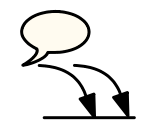
Children need to learn how to engage with, and play with people before they play with toys. Children usually, instinctively, turn to faces and voices and are far more interested in you than they are in a toy. People play is the first kind of play that children learn to do and is fundamental for the development of interaction, communication and learning.
People games are games without toys, just involving you and the child in an easy relaxed environment where you are both enjoying each other’s company. These games work because they have a predictable and repetitive element that all children enjoy. Please see our intensive interactions notes to support developing techniques and strategies.
Play games like:
- "I’m coming to get you…."
- ” “1…2…3…tickle…” “Ready, steady…….” “I’m going to tickle your… nose/toes/tummy/hand”
- Round and round the garden.
- This little piggy went to market.
- Peek a boo.
Let the child lead the interaction and have fun playing with them.
Repeat, repeat, repeat
These play skills support the development of fundamental enjoy
SENSORY AND EXPLORATION
Sensory and exploration play helps children to learn about the world round them. It helps children develop sensory experiences. It helps develop movement and co-ordination. It helps children learn that they can have an effect on the things around them
Here are some activities you can try at home to encourage sensory and exploratory play:
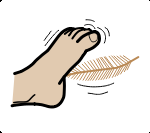
- Gather together objects that have different textures, such as rough, smooth, spiky, feathers for the child to feel and explore.
- Help child to bang, shake, examine, drop and throw objects.
- Give child toys they can squeeze and shake.
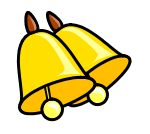
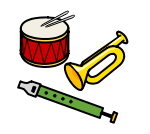
- Explore sounds using bells, rattles and musical toys.
- Play with toys and objects that are brightly coloured, shiny, lit-up.
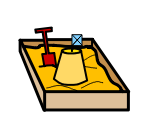
- Play with a range of messy activities such as sand, water, play dough.
- Make shakers out of pots filled with dried pasta or rice.
CAUSE AND EFFECT

Cause and effect is an important stage in a child’s development of play and learning. This type of play helps the child to learn and experience that their actions can have an effect in or on something else.
Here are some activities that all help develop cause and effect skills:
- Pull and push along toys
- Toys the child can squeeze and shake
- Stack up cups or bricks and knock them down
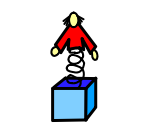
- Play with pop-up toys such as a jack-in-a-box, pop-up animals
- Lift the flap books and books that make noises.
- React to the child’s actions and sounds with a fun familiar response, for example, every time the child drops a toy, say “uh oh!”
PHYSICAL PLAY
Physical play helps develop movement and co-ordination. It helps children develop their independence. It is good for supporting sensory needs and good for active children and who struggle to concentrate.
Here are some ideas:
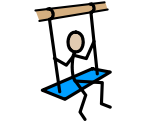
- Take the child to the park or outside play area, enjoying the swing and climbing frames.
- Playing ball games at the level the child can enjoy.
- Encouraging young children to jump in puddles, splash at bath time.
- Play hide and seek games and chase.
- Push along toys to encourage walking.
- Lie children across a large gym ball and rock them backwards and forwards

CONSTRUCTION PLAY
Helps to develop hand eye co-ordination and movement skills.
Learning how to put things together.
Improve memory through repeating
- Play posting games
- Play with shape sorters
- Easy and simple insert puzzles
- Build towers, bridges, houses out of bricks
- Use chairs and sheets to make dens
CREATIVE PLAY
- Develop hand movement
- Encourage imagination
- Experiment with different materials
- Experience feeling different textures
- Make collages by sticking materials on to card. You could use sweet wrappers, glitter, bottle tops, magazine pictures, string, tin foil, uncooked pasta and other food items.
- Use jam, chocolate spread, peanut butter, honey etc for finger painting.
- Make play dough – model into shapes.
- Try potato printing. Cut out patterns then print using paints.
- Try drawing round hands and toes.
- Cook together make biscuits then decorate them with colour icing, make faces using raisins and marshmallows.
- Make pictures using paints, pens, crayons and chalks.

PRETEND PLAY



Why is Pretend Play important?
Pretend play or symbolic play is important for several reasons:
- Developing understanding of what objects are used for.
- Developing the concept that a word can represent/symbolise an object just like a toy can be used to represent a real object.
- Developing flexible thinking and imagination.
- Learning about real-life situations and acting them out.
- Language often develops alongside pretend play
FIRST STAGE – Pretend play with real objects. This shows that a child understands what objects are and what we do with them:
- Before drink time get out the child’s empty cup and pretend to drink from it and encourage the child to do the same, and then go ahead with drink time.
- Collect several everyday items in a box for example, a hat, hairbrush, toothbrush, key, cup, toy phone, and blanket. Produce them one at a time, pretend to use them and encourage/help the child to do the same, for example, putting the phone to their ear, pretending to sleep with the blanket. Make appropriate symbolic noises such as a phone ringing sound or “shhh” with the blanket.
- Once the child has learned how to use the objects themselves, encourage them to relate them to other people, for example, help the child to brush your hair.
SECOND STAGE – Playing with teddies and dolls.
- Pretend to use the familiar objects on a large doll /teddy or toy character such as Peppa Pig. Help the child to do the same, you could feed teddy, brush doll’s hair, put teddy to bed, wash baby or make a teddy’s tea party. Use appropriate sounds and words such asshh, mmm, snoring noises.
THIRD STAGE – Sequences of pretend play
- Encourage the child to copy everyday activities at home such as sweeping, washing cups, cooking, washing clothes.
- Model and encourage pretend play with everyday objects: teddy, dolly, bed, table, food, and blanket. Extend the play into short sequences of play, for example, brush doll’s hair then wash doll’s face or give teddy a cup of tea then make him go for a walk. Continue to extend these sequences as the child becomes more confident.
FOURTH STAGE – Small world play
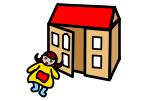
- Make the transition to small world toys such as dolls’ houses, garages or farms so that play becomes more imaginative and less dependent on the real objects. Encourage the child to make small world figures or dolls interact with each other, for example, making a figure kick a football to another
- At first you may need to lead the play and encourage the child to join in and copy. Later, the child might start the play; if so, respond by following his lead.
- Around this time, you can help the child start to use objects symbolically, pretending something is something else, for example, pretending a banana is a phone.
FIFTH STAGE – Encouraging complex symbolic play and role play
- Make the transition to miniature toys of all sorts – dolls’ house material, matchbox cars, play people, farm and zoo animals, soldiers etc – so that real life situations can be acted out and stories can be made up
- Extend the child’s storylines by introducing new ideas, for example, your car crashes into his car, so you get an ambulance and give him the breakdown lorry
- Increase the amount of spoken interaction alongside the physical interaction between the toys, for example, the police car arrives and you act out the policeman asking him, the driver, why the crash happened.
- Increase the imaginative element, so that there is a shift away from the real to the make believe for example, dressing up games and role play such as police officer, turning empty boxes into boats, cars, houses.
- Create opportunities for children to act out feelings and emotions, describe situations, ask questions, give instructions, and act out the real world.