Welcome to The St. Christopher School website. We hope you can find the information that you require. Please don’t hesitate to contact us if you require any further information or support.
RECEPTIVE LANGUAGE
This information has been put together for parents/carers on how to support your child’s home learning, for those who may have difficulties with their understanding. Please send any questions or concerns to SALT@tscs.southend.sch.uk
Blank Levels
What are Blank Levels?
Blank level questions were devised by Dr Marion Blank as a way to structure questioning at different levels of understanding ranging from 1 (simple one work answers, concrete understanding) to level 4 which requires reasoning (complex answers, more abstract understanding).
Level 1
Level 2
Level 3
Level 4
Single words
Phrases
Factual Sentences
Inference
NAMING
DESCRIBING
RE-TELLING
JUSTIFYING
Concrete
Abstract
Blank Level 1 – Naming
Naming, matching, repeating, recalling
The child has to match the language they hear directly to the picture/image they see:
Find one like this
What is that?
Who is that?
What are they doing?
What is the boy doing
Find another like this
Find one the same
Blank Level 2 – DESCRIBING
Describing, remembering, functions, difference and categories
The child has to match the language to what they see but they must focus on specific parts or details of the object, for example, find an object by function – find me something you eat? Complete the sentence… You wear a hat on your ……?
Describing a scene / someone is doing – what’s happened? what’s happening?
What is the ‘x’ doing?
Remembering information – Who? What? Where?
Finishing a sentence – finish this…
Identify and describe – What size? What shape? What colour? How many?
Taste / Smell / Feel?
Identifying function – which one do you …… with? / show me the one you use for …..
Identifying differences – What is different? How are these different?
Naming an object from a category – Tell me something that is a type of ….
Listen to two pieces of information – Find the bigyellow pencil
Remembering what is seen/done – What did you see/do?
The child has to use their own knowledge to make simple predications, deductions, links or generalisation
Describe an event – what will happen next?
Give directions – tell me how to…
Assume the role of another – What could ‘x’ say/do?
Follow two stage directions – Do… then do …
Identify similiarities – How are these the same?
Identify objects by exclusion – Find me something you can…, but not made of….
Identify alternatives – What else can you…?
Arrange pictures in a sequence – show my first, middle, last …
Formulate a story which links the pictures – Tell me a story…
Defining a word – what does….mean?
Blank Level 4 – justifying
Predicting, justifying, explaining obstacles, explaining observations, construction of an object.
The child has to problem solve, make predications, give solutions and explanations.
Predicting – What will happen if?
Justifying a prediction – Why will it happen?
Identifying cause of an event – What made it happen? Why did it happen?
Provide a solution to a problem (from another person’s point of view – What could you do? What could …..do?)
Explaining obstacles to a solution – Why can’t we…?
Explaining observation – How can we tell…?
Selecting means to a goal – What could we use?
Explaining means to a goal – Why should we use that?
Explaining construction of an object – Why is …. made of ….?
Quality interactions
10 Second Rule
1 – Ask a question
2 – Wait 10 seconds for a response
3 – Repeat the question
4 – Wait another 10 seconds
5 – Ask a rephrased question
Communication Time
Blank Level questions and understanding can be used at home to support and build communication skills at home. You can use them when reading together, watching a film, when a child is playing Fortnite. Use these questions as a guide to support developing Blank Levels at home.
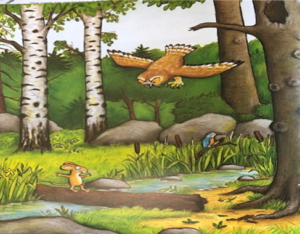
Here is an example of each level of questioning you could try at home when reading. The questions are split into Blank Levels, level one, green (easiest) , “Look at it”, Matching and Naming, to level four, red (most difficult). Read some of the examples below of each level of questioning below. Have a go at asking your child some questions when reading a book. In this example we have used The Gruffalo as an example. It is a good idea to start with the easiest questions.
Level 1 – Naming “Look at it”
Matching – Find one like this ….(point to the tree)
Naming objects– What is this? (point to the object e.g. flower) “Find the bird …”
Naming people– “Find the mouse”
Level 2 – Describing “Talk about it”
Describing something or someone – “What colour is the flower?” How many rocks in the stream? What shape is the whole in the tree?
Describe what is happening – (Understanding who, what and where questions) “Where is the mouse?” “Who is flying out of the tree?”
Categorising – “Tell me a type of animal”
Level 3 – Re-Telling “Think about it”
Feelings – “How is owl feeling?”
Predicting – “What will happen next?
Defining – “what is a bridge?”
Time Concepts – “when did Mouse go to the forest?” (daytime)
Level 4 – Justifying –“Reasoning”
Justifying answers – “How do we know it’s daytime?” (the sun is out, blue sky)
Thinking of alternatives – “what else could mouse use to cross the stream?”
Problem solving – “what could mouse do to hide from owl?”
Communication Board
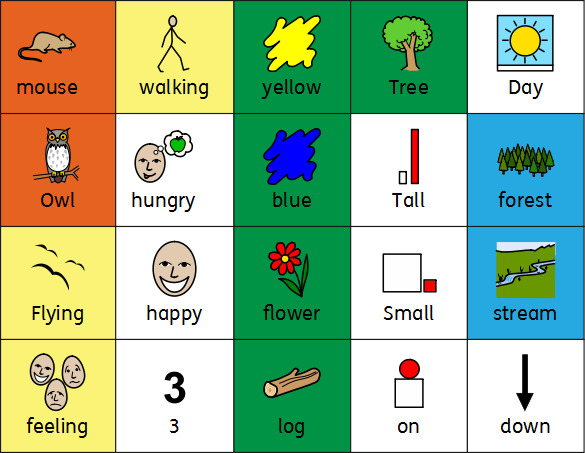
Here is an example of a communication board for the blank level questions. The child can use the communication board to answer the questions and support vocabulary.
Blank Level Questioning for a fiction book
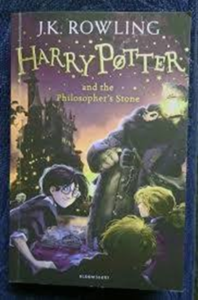
Here is an example of Blank Level questioning for a fiction book.
Level 1 – Naming “Look at it”
Matching – Find one like this ….(point to the star)
Naming objects– What is this? (point to the object e.g. lamp)
Naming people– “Find Harry Potter”
Level 2 – Describing “Talk about it”
Describing something or someone – “What are the colours of the Gryfindor House?” What shape is Harry Potter’s scar?
Describe what is happening – (Understanding who, what and where questions) “Where does Harry live in his aunt’s house?” “Who is the headmaster of Hogwarts?”
Categorising – “Tell me a type of game played with a ball”
Level 3 – Re-Telling “Think about it”
Feelings – “How is Ron feeling at the train station?”
Predicting – “What will happen next?
Defining – “what is a steam train?”
Time Concepts – “when did Harry leave for Hogwarts?” (daytime)
Level 4 – Justifying –“Reasoning”
Justifying answers – “How do we know it’s daytime?” (the platform is busy)
Thinking of alternatives – “what else could Harry use to get to Hogwarts?”
Problem solving – “what did Harry use to fix his broomstick in his Quidditch match?”
Blank Level Questioning for cooking
Here are some more examples of Blank Levels that you can use and adapt to cooking.
Level 1 – Naming “Look at it”
Matching – Find one like this ….(point to the wooden spoon)
Naming objects– What is this? (point to the object e.g. bowl)
Level 2 – Describing “Talk about it”
Describing something or someone – “What is the colour of the icing?” What shape is the baking tin?
Describe what is happening – (Understanding who, what and where questions) “Where is the oven?”
Categorising – “Tell me a type of fruit you put in cakes”
Level 3 – Re-Telling “Think about it”
Predicting – “What do we do next?
Defining – “what does bake mean?”
Time Concepts – “how long do we bake the cake?”
Level 4 – Justifying –“Reasoning”
Justifying answers – “How can we check the cake is cooked?”
Thinking of alternatives – “what could I use to mix the cake if I did not have a spoon?”
Problem solving – “what could we do if we dropped the bowl?”
If your child does not understand a question, there are different ways you can help:
Make sure your child is looking and listening. Give them time to respond.
Give two options e.g. – “is the owl flying or walking?”
Use gesture to help your child understand or give them a clue.
Sentence completion – give your child the first part of the sentence: e.g. “what colour is the flower?” “It’s ……”
Is the question at the right level? Try making your question simpler by moving down a level.
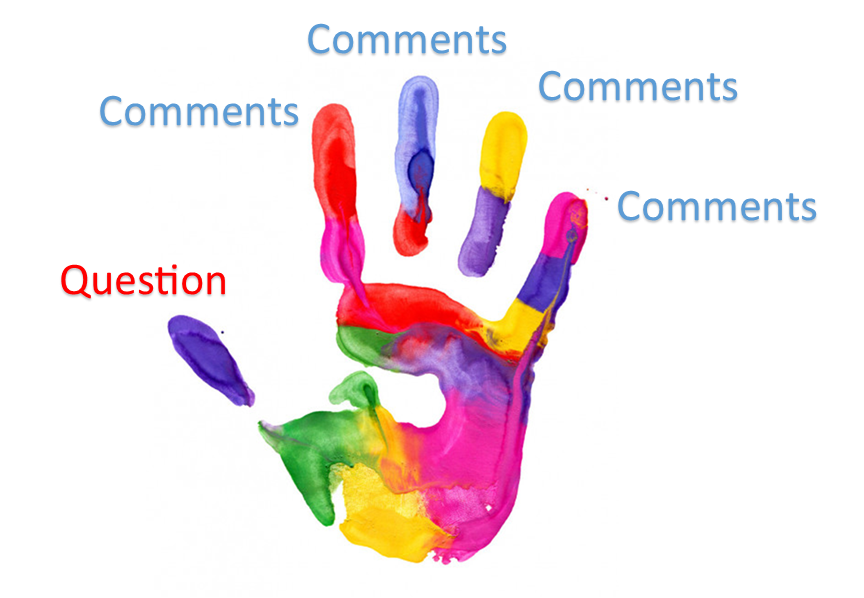
Remember, questions are a great way of checking your child’s understanding and supporting language development but remember to balance your question with comments, too many questions can be over whelming.
HAVE FUN HAVE FUN HAVE FUN HAVE FUN HAVE FUN HAVE FUN